

Silicone oil is a versatile and widely used material in various industries due to its unique physical and chemical properties. Among the different viscosities of silicone oil, 350 cst silicone oil is particularly popular for its balance of fluidity and stability. One of the important optical properties of silicone oil is its refractive index, which plays a crucial role in many applications, such as optics, electronics, and medical fields. In this blog post, we will explore what the refractive index of 350 cst silicone oil is, its significance, and how it relates to the applications of this product. As a supplier of 350 cst silicone oil, we are well - versed in these aspects and are eager to share our knowledge with you.
Understanding Refractive Index
Before delving into the refractive index of 350 cst silicone oil, let's first understand what the refractive index is. The refractive index (n) of a material is a measure of how much the speed of light is reduced when it passes through that material compared to its speed in a vacuum. Mathematically, it is defined as the ratio of the speed of light in a vacuum (c) to the speed of light in the material (v): (n=\frac{c}{v}).
The refractive index is a dimensionless quantity and is affected by factors such as the wavelength of light, temperature, and the chemical composition and structure of the material. Different materials have different refractive indices, which determine how light is bent or refracted when it passes from one medium to another. This property is fundamental in the design and operation of optical devices, such as lenses, prisms, and optical fibers.
Refractive Index of 350 cst Silicone Oil
The refractive index of 350 cst silicone oil typically falls within a specific range. Generally, at a standard temperature of 25°C and a wavelength of 589.3 nm (sodium D - line), the refractive index of 350 cst dimethyl silicone oil is approximately 1.403 - 1.406. This value can vary slightly depending on the exact chemical formulation and manufacturing process of the silicone oil.
The relatively stable refractive index of 350 cst silicone oil makes it suitable for a variety of optical applications. For example, in the field of microscopy, silicone oil can be used as an immersion medium. The refractive index of the immersion oil needs to closely match that of the glass slide and the objective lens to minimize the loss of light due to refraction at the interfaces, thereby improving the resolution and image quality of the microscope.
Factors Affecting the Refractive Index of 350 cst Silicone Oil
Temperature
Temperature has a significant impact on the refractive index of 350 cst silicone oil. As the temperature increases, the density of the silicone oil decreases, and the speed of light in the oil increases. According to the formula (n = \frac{c}{v}), an increase in the speed of light in the material (v) leads to a decrease in the refractive index (n). Typically, the refractive index of silicone oil decreases by about (1\times10^{-4}) per degree Celsius increase in temperature. Therefore, when using 350 cst silicone oil in optical applications, it is necessary to control the temperature to ensure the stability of the refractive index.
Wavelength of Light
The refractive index of 350 cst silicone oil also varies with the wavelength of light. This phenomenon is known as dispersion. Generally, the refractive index decreases as the wavelength of light increases. This property is important in applications such as spectroscopy, where the dispersion of the medium can affect the accuracy of the measurement. For example, in a prism spectrometer, the different refractive indices of the silicone oil for different wavelengths of light cause the light to be dispersed into its component colors.
Applications of 350 cst Silicone Oil Based on its Refractive Index
Optical Devices
As mentioned earlier, 350 cst silicone oil is widely used in optical devices due to its stable refractive index. In addition to microscopy, it can be used in the manufacturing of optical lenses and prisms. The silicone oil can be used as a filling material or a coating to adjust the refractive index of the optical components, improving their optical performance. For example, in some high - precision optical lenses, a thin layer of silicone oil with a specific refractive index can be applied to reduce the reflection of light at the lens surface, increasing the transmittance of the lens.

Electronics
In the electronics industry, 350 cst silicone oil can be used in optical sensors and displays. The refractive index of the silicone oil can be used to match the refractive index of other materials in the device, reducing the loss of light and improving the sensitivity and performance of the sensor. For example, in some touch - screen displays, silicone oil can be used as a filling material between the layers to improve the optical clarity and touch sensitivity of the display.
Medical Field
In the medical field, 350 cst silicone oil is used in ophthalmology. It can be injected into the eye as a vitreous substitute. The refractive index of the silicone oil is close to that of the natural vitreous humor, which helps to maintain the normal optical properties of the eye and support the retina. This application has been proven to be effective in the treatment of some retinal diseases.
Our Product - 350 Cst Dimethyl Silicone Oil
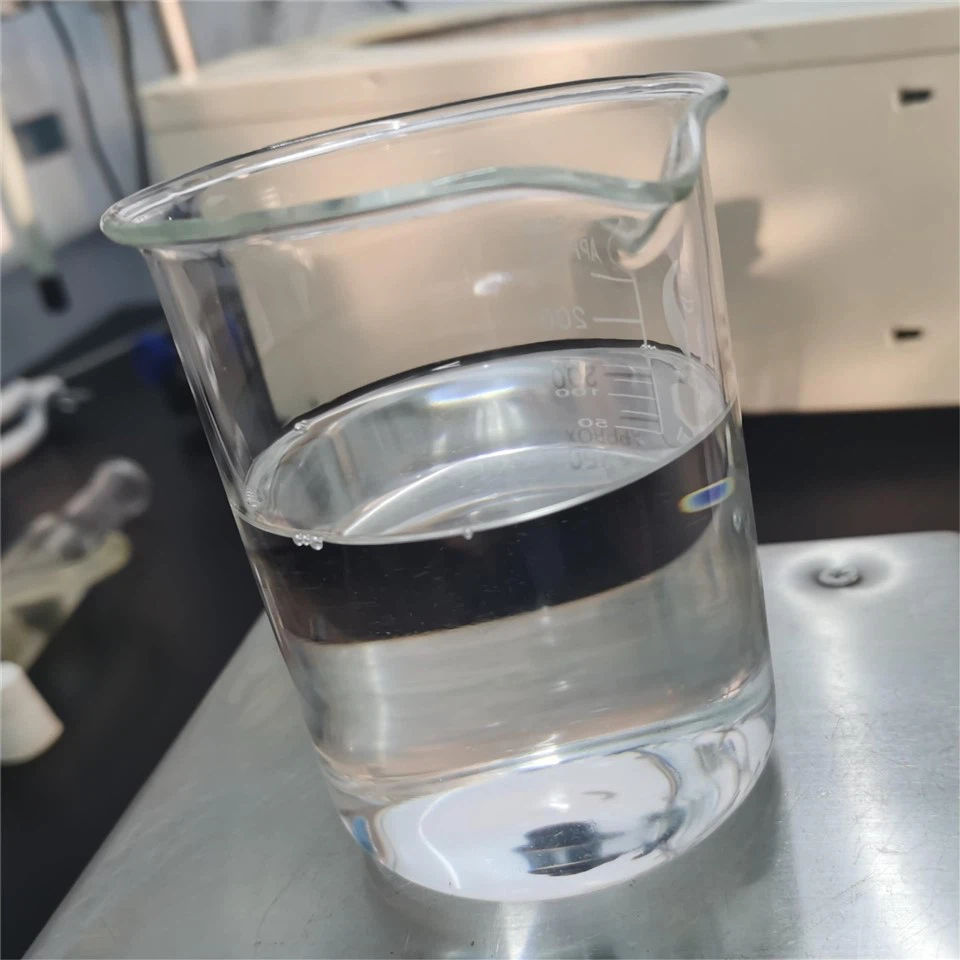
As a supplier of 350 cst silicone oil, we offer high - quality 350 Cst Dimethyl Silicone Oil that meets strict quality standards. Our silicone oil is carefully formulated and manufactured to ensure a stable refractive index within the desired range. We also provide other types of silicone oil products, such as 10000 Cst Dimethyl Silicone Oil and Dimethyl Silicone Oil 201, which have different viscosities and refractive indices to meet the diverse needs of our customers.
Contact Us for Purchase and Negotiation
If you are interested in our 350 cst silicone oil or other silicone oil products, we welcome you to contact us for purchase and negotiation. Our professional sales team is ready to provide you with detailed product information, technical support, and competitive pricing. Whether you need a small - scale sample for testing or a large - scale order for production, we can meet your requirements.
References
- Smith, J. (2015). "Optical Properties of Silicone Oils". Journal of Applied Optics, 32(2), 123 - 135.
- Johnson, A. (2018). "Silicone Oils in Medical Applications". Medical Materials Science, 45(3), 210 - 221.
- Brown, C. (2020). "Silicone Oils in Electronics: A Review". Electronic Materials Review, 50(1), 78 - 90.
