

Among organosilicon materials, hydrogen-containing silicone oils are widely used in rubber, coatings, textiles, electronics, and other fields due to their unique reactivity and excellent performance. Understanding their core properties requires an understanding of their molecular formula, which not only reveals the chemical composition of hydrogen-containing silicone oil but also determines the intrinsic relationship between its molecular structure and reactivity. This article provides a detailed analysis of the molecular formula of hydrogen-containing silicone oils, exploring the relationship between their structure and properties, as well as their resulting application value.
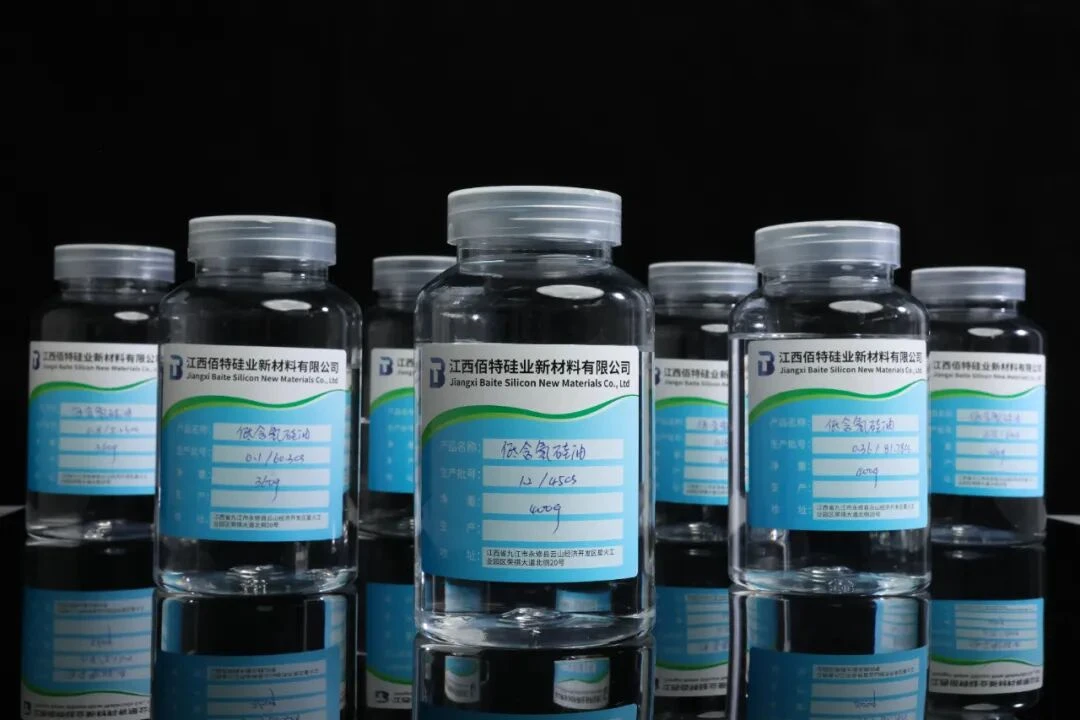
I. The Core Molecular Formula of Hydrogen-Containing Silicone Oils: General Formula and Key Components
Hydrogen-containing silicone oils are a class of organosilicon polymers with siloxane chains as the main backbone and Si-H bonds located on side chains or terminal groups. Their general molecular formula can be represented as:
(CH₃)₃SiO[(CH₃)HSiO]ₙ[(CH₃)₂SiO]ₘSi(CH₃)₃
(where n and m are positive integers, n ≥ 1, and m ≥ 0).
From this general formula, the core components of hydrogen-containing silicone oil can be clearly identified:
1. Main Chain Backbone
The backbone is formed by alternating silicon (Si) and oxygen (O) atoms through -Si-O-Si- bonds, which is the fundamental structure shared by all silicone oil materials. This structure provides hydrogen-containing silicone oil with excellent high-temperature resistance, aging resistance, and chemical stability.
2. Characteristic Functional Groups
The defining feature of hydrogen-containing silicone oil is the presence of Si-H bonds (silicon-hydrogen bonds) within the molecule. These functional groups are introduced through the [(CH₃)HSiO]ₙ repeating units in the molecular structure. As the value of n increases, the number of Si-H bonds in the molecule increases, resulting in higher reactivity.
3. Substituent Groups
In addition to hydrogen atoms in the Si-H bonds, methyl groups (-CH₃) are attached to silicon atoms. These include the methyl groups in the [(CH₃)₂SiO]ₘ repeating units and the terminal (CH₃)₃Si- groups. The presence of methyl groups enhances the hydrophobicity and chemical stability of the molecule while also influencing the viscosity and flexibility of the material.
4. End-Group Structure
Both ends of the molecular chain are capped with trimethylsilyl groups ((CH₃)₃Si-). These terminal groups stabilize the molecular structure, preventing excessive polymerization or degradation of the siloxane chain. They also influence the viscosity and compatibility of the material.
It is important to note that when m = 0, the molecular formula simplifies to:
(CH₃)₃SiO[(CH₃)HSiO]ₙSi(CH₃)₃
This type of product is generally referred to as high-hydrogen-content silicone oil, featuring a high density of Si-H bonds and extremely strong reactivity.
When m > 0, the proportion of [(CH₃)₂SiO]ₘ repeating units increases. As a result, the Si-H bond density decreases, reducing reactivity while improving flexibility and compatibility. Such products are commonly referred to as low-hydrogen-content silicone oils or medium-hydrogen-content silicone oils.
II. Molecular Formula Determines Structure: Si-H Bonds as the "Core Code" of Performance
The molecular formula of hydrogen-containing silicone oil directly determines its key structural characteristic-the presence and distribution of Si-H bonds. This feature distinguishes hydrogen-containing silicone oil from other silicone oils, such as dimethyl silicone oil, and is the source of its unique properties.
From a chemical perspective, Si-H bonds exhibit high reactivity. This is mainly due to the electronegativity difference between silicon and hydrogen atoms (Si: 1.90; H: 2.20), which creates polarity within the Si-H bond and enables it to participate in various chemical reactions.
1. Addition Reactions
Under the action of platinum catalysts, Si-H bonds can undergo addition reactions with compounds containing carbon-carbon double bonds (C=C) or carbon-carbon triple bonds (C≡C). This reaction is one of the most important characteristics of hydrogen-containing silicone oils and forms the basis for their applications in silicone rubber crosslinking, fabric waterproofing treatments, and coating modification.
2. Hydrolysis Reactions
Under certain conditions, Si-H bonds can undergo hydrolysis reactions to form Si-OH bonds (silanol groups). These silanol groups can further undergo condensation reactions to form Si-O-Si bonds, enabling material curing.
3. Oxidation Reactions
Si-H bonds are susceptible to oxidation. Exposure to air at elevated temperatures or contact with oxidizing agents may result in the formation of Si-OH or Si-O-Si bonds. This property can be utilized in specific applications, such as the preparation of modified silicone resins. However, moisture and excessive heat should be avoided during storage and application.
Furthermore, the methyl groups present in the molecular structure provide hydrogen-containing silicone oil with excellent hydrophobicity. As hydrophobic groups, methyl groups are evenly distributed along the molecular chain, effectively repelling water molecules. This is a key reason why hydrogen-containing silicone oils are widely used in waterproofing and moisture-resistant materials.
The molecular chain length, determined by the combined values of n + m, directly affects the viscosity of hydrogen-containing silicone oil. A larger n + m value indicates a longer molecular chain and higher viscosity, while a smaller value results in lower viscosity and improved flowability.
III. Core Applications Based on Molecular Formula Characteristics
Due to the high reactivity, hydrophobicity, and thermal stability provided by their molecular structure, hydrogen-containing silicone oils demonstrate significant application value across multiple industries. Their applications are closely related to the reactive properties of Si-H bonds.
1. Silicone Rubber Crosslinking Agent
One of the most important applications of hydrogen-containing silicone oil is its use as a crosslinking agent (also known as a vulcanizing agent) in silicone rubber production.
During the manufacturing process, hydrogen-containing silicone oil undergoes addition reactions between its Si-H bonds and the C=C bonds in silicone rubber molecular chains under platinum catalyst conditions. This process converts linear silicone molecules into a three-dimensional crosslinked network structure, improving the mechanical strength, elasticity, and high-temperature resistance of silicone rubber.
The n-value (representing Si-H bond density) must be carefully controlled. If the value is too high, excessive crosslinking may occur, causing the silicone rubber to become brittle. If the value is too low, insufficient crosslinking may occur, resulting in poor mechanical performance.
2. Fabric Waterproofing Finishing Agent
Taking advantage of its hydrophobicity and reactivity, hydrogen-containing silicone oil can be used for waterproof finishing of cotton, linen, polyester, and other fabrics.
Through appropriate treatment processes, Si-H bonds in hydrogen-containing silicone oil molecules can react with hydroxyl (-OH) or amino (-NH₂) groups on fiber surfaces, introducing hydrophobic silicone groups onto the fibers and forming a protective waterproof film. This provides fabrics with excellent water resistance and stain resistance while maintaining breathability and a soft hand feel.
3. Coating and Adhesive Modifiers
Adding an appropriate amount of hydrogen-containing silicone oil to coating and adhesive systems can improve their performance through the reactive properties of Si-H bonds.
For example, incorporating hydrogen-containing silicone oil into acrylic coatings can enhance weather resistance, heat resistance, and hydrophobicity while reducing cracking and yellowing. In adhesive systems, hydrogen-containing silicone oil can improve flexibility, aging resistance, bonding strength, and service life.
4. Electronic Materials
Hydrogen-containing silicone oil is also used in electronic packaging materials, thermal greases, and related applications. Its excellent thermal stability, aging resistance, and electrical insulation properties help protect electronic components from high temperatures, humidity, and chemical environments.
By adjusting the values of n and m in the molecular formula, manufacturers can control viscosity and other material properties to meet the requirements of different electronic packaging applications.
IV. Summary: Understanding the Molecular Formula and Mastering the Application Principles of Hydrogen-Containing Silicone Oil
Although the molecular formula of hydrogen-containing silicone oil:
(CH₃)₃SiO[(CH₃)HSiO]ₙ[(CH₃)₂SiO]ₘSi(CH₃)₃
appears complex, it clearly reveals its fundamental structure:
Si-O main chain + methyl substitution + Si-H reactive functional groups.
Among these structural elements, the Si-H bond is the key factor determining reactivity; the methyl groups provide hydrophobicity and stability; and variations in the values of n and m regulate important properties such as activity, viscosity, and compatibility.
Whether used as a silicone rubber crosslinking agent, fabric waterproofing agent, or coating modifier, the applications of hydrogen-containing silicone oil are fundamentally derived from the molecular structure and properties determined by its formula.
Therefore, understanding the molecular formula of hydrogen-containing silicone oil not only helps explain its chemical characteristics but also provides a theoretical foundation for its rational application and performance optimization. This represents one of the core principles in the research and industrial application of organosilicon materials.
With the continued development of precise molecular structure control technologies for hydrogen-containing silicone oils, their application potential in advanced materials, new energy technologies, and biomedical fields is expected to expand further.


