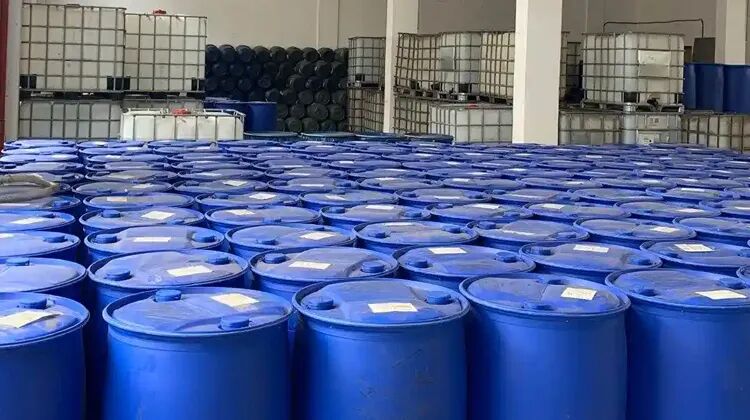
High-hydrogen silicone oil is a polysiloxane with a high hydrogen content. Its molecular structure contains a large number of active Si-H (silicon-hydrogen) bonds. Its key characteristic is high reactivity, allowing it to undergo crosslinking or addition reactions with other functional groups, such as hydroxyl and vinyl groups, through these Si-H bonds. As a result, it is widely used in material modification and functional silicone products.
Physicochemical Properties
The most important quality indicators of hydrogen-containing silicone oil are hydrogen content, acid value, and volatile matter content. Among these parameters, a higher hydrogen content generally indicates stronger crosslinking reactivity.
Application Areas
1. Waterproofing Agents
Hydrogen-containing silicone oil utilizes the nonpolar Si-O backbone and methyl groups (-CH₃) to repel moisture. Under the action of a catalyst, it can crosslink at relatively low temperatures to form a dense protective film. This film adheres firmly to the substrate surface through chemical bonding, providing highly efficient and durable waterproofing, moisture resistance, and reinforcement. It is widely used in building materials, substrate treatments, fabric finishing, powder materials, and related applications.
2. Vulcanizing Agents and Crosslinking Agents
High-hydrogen-content silicone oil is typically incorporated at 10–20% in vulcanizing agent formulations. Under platinum (Pt) catalyst catalysis, it serves as a crosslinking agent for addition-cure liquid silicone rubber (LSR). In liquid silicone rubber systems, the typical dosage of high-hydrogen-content silicone oil is approximately 2%.
3. Surface Treatment of Magnesium Oxide Powder
Modified magnesium oxide powder is mainly classified into electrical grade and refractory grade, depending on the application. Refractory-grade magnesium oxide powder generally does not require moisture protection. However, during the preparation of electrical-grade magnesium oxide powder, hydrogen-containing silicone oil is added as a moisture-proofing agent to improve its performance and storage stability.
4. Production of Modified Silicone Oils
High-hydrogen silicone oil is an important raw material for the synthesis of various modified silicone oils. Through hydrosilylation reactions, it can be converted into polyether-modified silicone oil, alkyl-modified silicone oil, epoxy-modified silicone oil, and other functional silicone products. These materials are widely used in foam stabilizers, fabric finishing agents, and numerous specialty applications.
5. Lubricants and Release Agents
High-hydrogen silicone oil can be used as a lubricant and release agent in rubber and plastic processing. It reduces wear in bearings and gears, promotes product release during molding operations, and improves production efficiency. It is also widely used in the manufacture of rubber products, paper processing, glass fiber treatment, and ink production.
Product Photos