

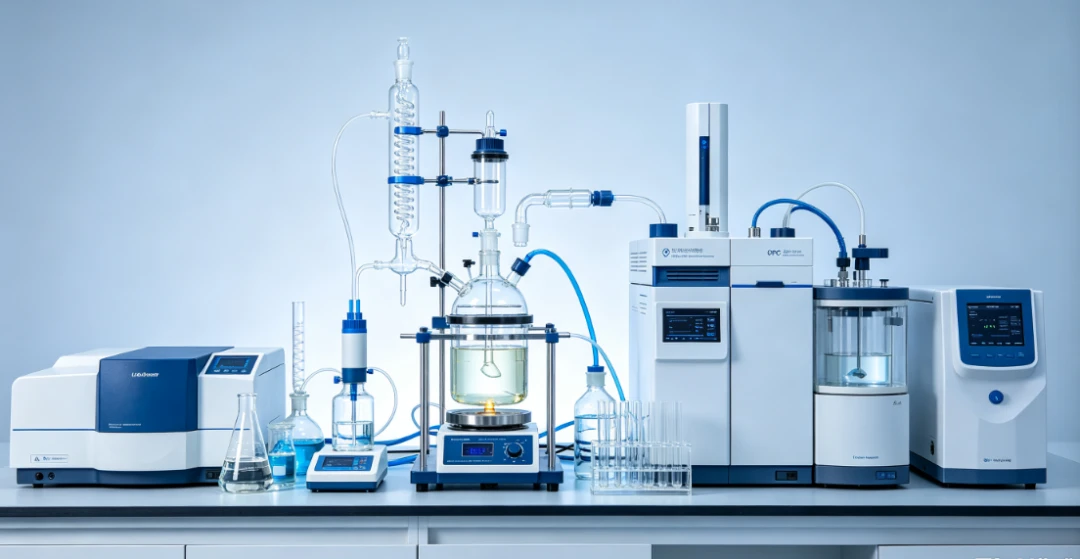
The true bottleneck for silicone oil enterprises lies not in formulations, but in the synergistic capability between synthesis and testing.
As regulations regarding residual cyclic siloxanes tighten and the need to replace high-end imported modified silicone oils becomes urgent, many companies are realizing that the ability to manufacture a product does not equate to the ability to produce it consistently well. I have repeatedly emphasized a key point during internal technical reviews: over the next three years, competition in the silicone oil industry will shift from "who can make it" to "who can consistently achieve precision, accuracy, and regulatory compliance."
Over the past year, obstacles with export orders, rigorous scrutiny of details during factory audits by high-end clients, and repeated setbacks in new product development have all pointed to a single shortcoming: technical capabilities remain stuck at the level of "formula replication," lacking the comprehensive synergy required to integrate synthesis with testing.
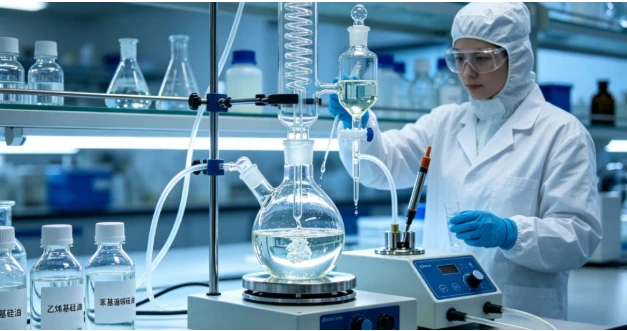
Three technology areas worth investing in right now
Approach 1: Process development for modified silicone oils with low cyclic content.
With the EU's REACH regulations imposing increasingly strict controls on D4, D5, and D6, export-oriented enterprises face mounting, direct pressure regarding compliance. However, many companies still rely on "post-synthesis devolatilization"-removing cyclic compounds only after the synthesis is complete. This not only increases energy consumption but, more critically, the devolatilization process often leads to viscosity fluctuations and a broadening of the molecular weight distribution, thereby compromising downstream performance.
A more valuable approach is to inhibit the formation of cyclic structures at the source of synthesis. This entails the synergistic optimization of multiple variables, including raw material selection, catalyst systems, temperature profiles, and dehydration processes.
Direction 2: Precision Control of the Molecular Structure of Specialty Modified Silicone Oils
Amino silicone oil, vinyl silicone oil, and phenyl-terminated silicone oil-these products may not sound new, yet few companies can truly achieve a narrow molecular weight distribution, controllable functionality, and consistent batch-to-batch quality.
Customer requirements are becoming increasingly exacting: even slight deviations in the amine value lead to noticeable differences in tactile feel and yellowing resistance; fluctuations in vinyl content directly impact the cross-linking density of addition-cure silicone rubber; and insufficient end-capping rates result in a complete failure of product performance. At the root of these issues lies a lack of capability to control structure at the molecular level.
Approach 3: Implementation of Comprehensive Physicochemical and Spectroscopic Characterization Capabilities
Many factories have acquired instruments such as IR, GC, and GPC, yet their personnel are often capable only of "pushing buttons to generate reports"; they lack the skills to interpret spectra or-more importantly-to use test results to guide process adjustments.
Truly competitive enterprises should be able to utilize IR to identify characteristic functional groups, GC to analyze low-boiling-point components, headspace GC to precisely quantify residual cyclic compounds, and GPC to monitor molecular weight distribution-while ensuring that every test result corresponds to specific process adjustments. Testing is not merely about generating reports; it is about guiding the manufacturing process.
Why the Linear Form Approach Merits Renewed Attention
Ring-opening polymerization of cyclic siloxanes and the condensation of linear siloxanes represent the two primary pathways for producing modified silicone oils. As requirements regarding low cyclic content become stricter, the advantages of the linear siloxane pathway are re-emerging.
The core value of the linear siloxane pathway lies in its ability to minimize the tendency for cyclic siloxane formation at the molecular design stage. This is particularly evident in the production of modified silicone oils and high-molecular-weight silicone oils using hydroxyl-terminated linear siloxanes as raw materials; the process offers superior control over molecular structure and fewer side reactions, resulting in significant overall advantages.
However, the linear siloxane pathway demands more rigorous process control: the molecular weight and hydroxyl content of the linear siloxane raw materials must remain stable; parameters such as temperature, vacuum level, and duration during the dehydration phase require precise coordination; and the choice and dosage of the catalyst directly influence the reaction rate and the extent of side reactions. It is precisely these details that serve as the critical variables determining product quality.
Testing capabilities are becoming an "invisible threshold."
A client reported that cyclic oligomer residue levels exceeded limits, while the company insisted its own tests showed no issues-only for it to emerge that inconsistent testing methods rendered the data completely incomparable.
This situation reveals shortcomings at three levels:
Level 1: Inability to select the right method. For instance, using headspace GC for residual cyclic species, standard GC for low-boiling-point composition, GPC for molecular weight distribution, and IR spectroscopy for characteristic functional groups. If the method is wrong, the precision of the data is meaningless.
Level 2: Inability to operate the equipment correctly. Parameters such as equilibration temperature, equilibration time, and split ratio in headspace GC, or column selection and standard calibration in GPC, directly affect the accuracy of the results.
Level 3: Inability to interpret the data. When looking at a GC chromatogram, one might notice the peaks but fail to assess the extent of the reaction based on changes in peak area; with an IR spectrum, one might identify the Si-O-Si peak but fail to locate characteristic amino absorption bands or determine if end-capping is complete; and with a GPC curve, one might look only at the number-average molecular weight without analyzing the implications of the distribution width or a bimodal profile.
Process safety: the unavoidable bottom line
Silicone oil production involves processes such as polymerization, cracking, and neutralization, with certain reactions posing risks of exothermicity. For small and medium-sized enterprises, accidents are most likely to occur during process scale-up-transitioning from successful laboratory trials to pilot or full-scale production-due to inadequate heat exchange, insufficient agitation, or lagging temperature control.
Inherently safe design is not a remedial measure applied after the fact; rather, it is a critical consideration during the process development stage. Understanding reaction exotherm profiles, emergency cooling strategies, equipment material compatibility, and the safety limits of operating parameters represents fundamental knowledge that every technical professional must master.
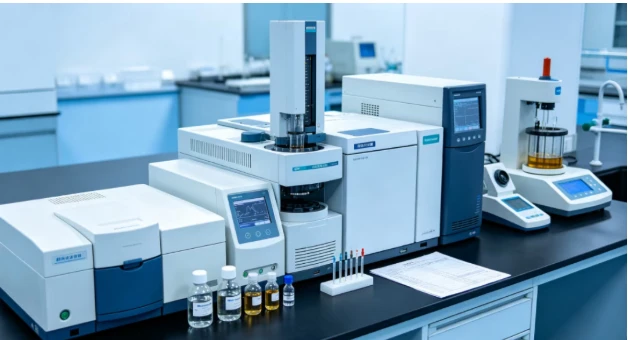
A dual-track practical workflow combining synthesis and testing.
Ultimately, the discussion must center on practical solutions. The most effective way to enhance skills is not merely by reading papers or attending lectures, but by personally executing the entire synthesis and testing workflow.
The 2026 Silicone Oil Practical Skills Training Course is specifically designed to address the aforementioned areas and skill gaps: Practical Synthesis-covering three types of modified silicone oils and mainstream synthesis routes: synthesizing amino silicone oil from linear precursors (mastering amine value control); synthesizing vinyl silicone oil from linear precursors (understanding vinyl content regulation); and synthesizing vinyl-terminated phenyl silicone oil (delving into key process techniques for high-end phenyl silicone oils). Each project features hands-on instruction and on-site Q&A with university professors, guiding participants through the entire process from reaction principles to operational details. Practical Testing-hands-on operation across eight categories: Structural Characterization and Composition Analysis (FTIR, GC, Headspace-GC for D4/D5/D6 quantification, and GPC for Mn/Mw/PDI) and Rapid Physical Property Testing (rapid moisture analyzer for volatiles, Abbe refractometer for refractive index, and kinematic viscometer for viscosity). Each test includes instruction on result analysis, enabling participants not only to perform the tests but also to interpret the process implications behind the data. Theoretical Foundation-a comprehensive framework covering everything from principles to safety: the curriculum also addresses basic production process principles, typical equipment selection, raw material and auxiliary selection, principles of inherently safe design, and accident case studies, helping participants build a complete knowledge framework.
In Closing
The silicone oil industry is undergoing a transition from a focus on volume to a focus on quality. In the past, the ability to consistently produce compliant products defined competitiveness; in the future, true technological barriers will be defined by the ability to precisely control molecular structures, suppress residual cyclic content below regulatory limits, and drive process optimization through analytical data. There are no shortcuts to acquiring these capabilities; they can only be built through systematic learning and hands-on practice. It is my hope that every technical professional in the silicone oil industry will use this transitional period to solidify their technical foundation.


